
How to Prepare for Your First BJJ Competition
By Gracie Barra Celebration · August 2026
You have been training Brazilian Jiu-Jitsu for a few months — maybe longer. Your coach has mentioned competition, and part of you is curious. Another part of you is terrified. That tension between excitement and fear is completely normal, and it is actually a sign that you are ready to consider competing.
Your first BJJ tournament will be one of the most intense, nerve-wracking, and rewarding experiences of your martial arts journey. The key to making it a positive experience — regardless of the outcome — is preparation. Not just physical preparation, but mental, logistical, and strategic preparation.
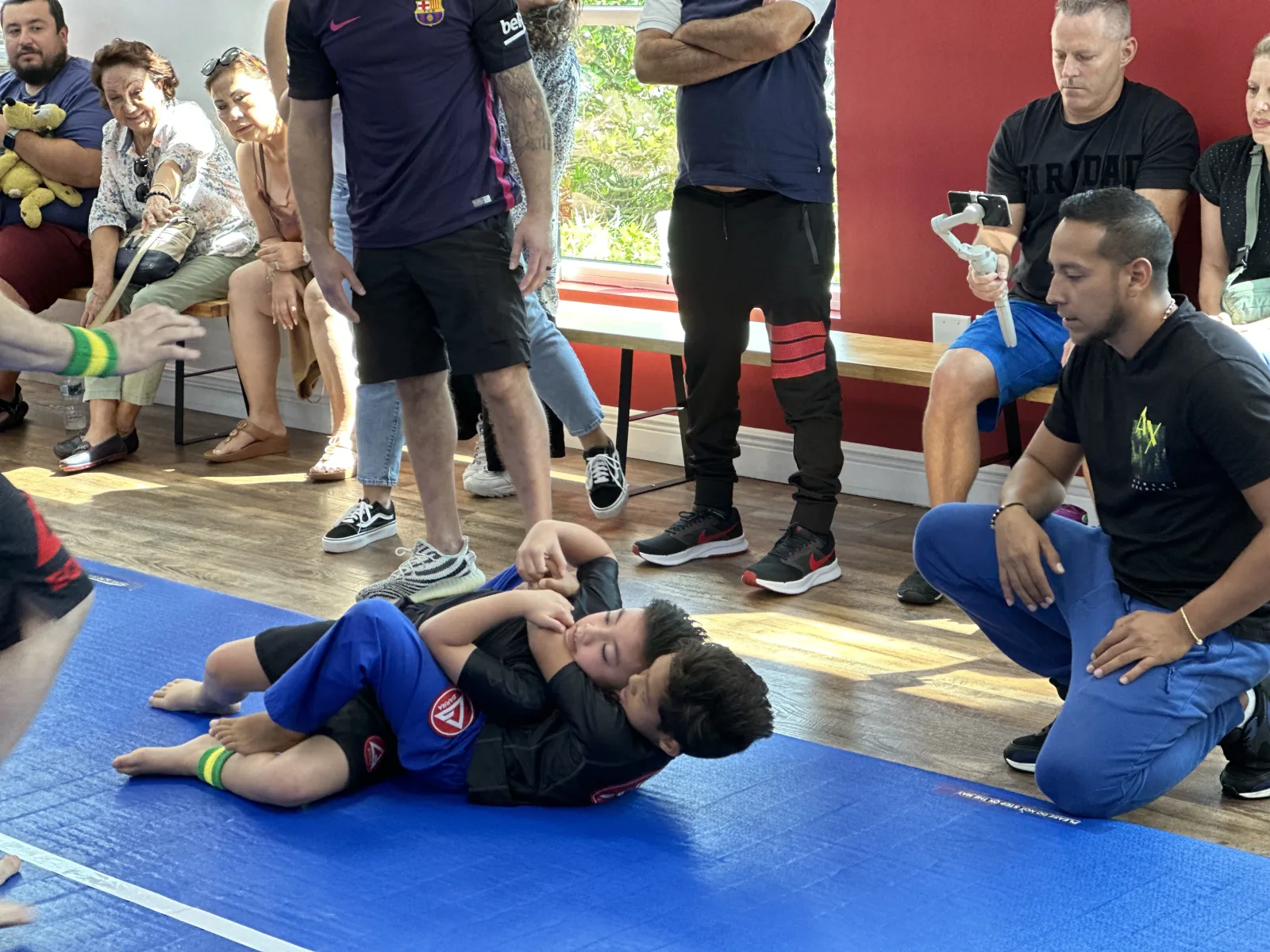
The energy you see at our in-house tournaments — the cheering, the family support, the visible nerves — is the same energy our competitors carry into IBJJF events when they travel to compete.
Here is everything you need to know to prepare for your first BJJ competition.
Mental Preparation: Managing the Nerves
The single biggest challenge for first-time competitors is not technique — it is nerves. You will be anxious. Your heart will race. Your hands might shake. You might question why you signed up. This is all normal, and it happens to competitors at every level, from white belt to black belt.
Here is how to manage it:
- Reframe the goal: Your goal for your first competition is not to win. It is to compete. To step on the mat in a tournament setting, perform your techniques under pressure, and complete the experience. Winning is a bonus. The real victory is showing up.
- Visualize the experience: In the weeks before the tournament, spend time visualizing the entire process — the warm-up area, the referee calling your name, the handshake, the grip fight, your first technique. Visualization familiarizes your brain with the experience so it feels less foreign on the day.
- Accept the adrenaline: You will have an adrenaline dump when the match starts. Your body will feel different than it does in training. The first 30 seconds might feel frantic. This is universal. Breathe through it. Focus on your grips and your posture. The adrenaline will settle within a minute.
- Talk to experienced competitors: At Gracie Barra Celebration, you have training partners who have competed before. Ask them about their first tournament. Their stories will normalize the experience and give you practical insights you will not find online.
Training Intensity: Peaking at the Right Time
A common mistake for first-time competitors is training too hard in the final week before the tournament. They want to cram in as much preparation as possible, but what they actually do is exhaust themselves and increase their injury risk.
Here is a general timeline for competition training:
6-4 weeks out: High-intensity training. This is when you increase your sparring rounds, sharpen your A-game techniques, and push your conditioning. Train at your highest volume and intensity during this phase.
3-2 weeks out: Moderate intensity. Maintain your technique work but start reducing the volume of hard sparring. Focus on refining your game plan rather than learning new techniques. This is not the time for experimentation.
Final week: Taper. Light training, drilling, and positional sparring only. No hard rolls. No new techniques. Your body needs time to recover and your mind needs time to stay fresh. The work is already done — this week is about maintaining sharpness without depleting energy.
At Gracie Barra Celebration, our Saturday competition classes are designed specifically for students preparing for tournaments. These classes focus on match simulation, competition-specific scenarios, and the strategic elements of competitive BJJ that go beyond regular training.
Developing a Game Plan
Walking into a competition without a game plan is like walking into an exam without studying. You might get lucky, but you are leaving the outcome to chance.
A game plan does not need to be complicated. For your first tournament, focus on:
- One takedown or guard pull: Decide how you want the match to start. Do you want to take your opponent down? Pull guard? Have a clear plan for the first exchange and drill it until it is automatic.
- Two or three positions you are strongest from: Identify the positions where you feel most confident — maybe closed guard, maybe mount, maybe side control. Build your game plan around getting to those positions and working from them.
- One or two submissions you hit consistently: What are the submissions you land most often in training? An arm bar from guard? A cross-collar choke from mount? Those are your money moves. Drill the setups, transitions, and finishes until they are second nature.
- Escape plans: You will end up in bad positions. Have a practiced escape from mount, side control, and back control. Knowing you have a reliable escape reduces panic when things go wrong.
Discuss your game plan with your coach. Professor Rodrigo Frezza and our team at GB Celebration can help you build a realistic plan based on your current skills and identify areas to sharpen before competition day.
Weight Management
Most BJJ tournaments use weight classes, and you will need to weigh in before competing. Here is how to handle this sensibly:
- Know your walk-around weight: Weigh yourself at the same time each day for a week to establish your baseline. This is the weight you will work from.
- Compete at or near your natural weight: For your first tournament, do not try to cut weight. Compete in the weight class that matches your natural, healthy body weight. Weight cutting is a skill that experienced competitors develop over time — it is not something to experiment with before your first event.
- Know the weigh-in rules: Some tournaments weigh in the day before. Some weigh in on the day of competition. Some weigh in with the gi, some without. Know the specific rules for your tournament and plan accordingly.
- Hydrate and eat normally: Dehydration and food restriction before a competition impair performance significantly. Eat clean, stay hydrated, and let your training — not your weight — be the focus.
What to Pack for Competition Day
Tournament logistics can be stressful if you are not prepared. Here is a complete packing list:
- Competition gi: Make sure it meets the tournament's requirements (color, patch placement, fit). IBJJF tournaments have specific gi regulations — check them in advance.
- Backup gi: If your primary gi fails inspection (wrong size, wrong patches), you need a backup. This has saved many competitors from being disqualified before their first match.
- Rashguard and shorts: Required for no-gi divisions and useful as a base layer under your gi.
- Belt: Your current rank belt in good condition.
- Mouthguard: Required by most tournaments and a good idea regardless.
- Athletic tape: For fingers, toes, or any area that needs support.
- Sandals/flip-flops: For walking around the venue off the mat. Never walk on gym or venue floors barefoot.
- Water and electrolytes: Stay hydrated throughout the day. Tournaments involve a lot of waiting.
- Snacks: Light, easily digestible food — bananas, granola bars, rice cakes. Avoid heavy meals between matches.
- Towel: For drying off between matches.
- Registration confirmation: Print your registration or have it accessible on your phone.
- Identification: Most tournaments require a photo ID.
- Cash: Some venues have parking or food vendors that only accept cash.
Day-of Tips
Arrive early. Tournament schedules can shift, and brackets may start earlier than listed. Arrive at least 90 minutes before your scheduled time. This gives you time to check in, inspect the venue, warm up, and mentally prepare.
Warm up thoroughly. Do not rely on your first match to warm you up. Find a space to do dynamic stretches, light drilling, and movement exercises. Break a light sweat. Your body should be ready to perform from the first second of your match.
Watch matches before yours. Observe how the referee calls points, how the timing works, and how the brackets are structured. Familiarize yourself with the rhythm of the tournament.
Stay loose between matches. If you have multiple matches, keep moving between them. Light stretching, walking around, and gentle movement prevent your body from tightening up during the wait.
Have your coach in your corner. If possible, bring your coach or an experienced training partner to coach you from the side of the mat during your matches. Their perspective and verbal guidance during a match can be invaluable — they see things you cannot while you are in the middle of a roll.
Win or learn. If you win, celebrate the accomplishment. If you lose, analyze what happened without emotional judgment. What worked? What did your opponent do that you did not expect? What will you focus on in training moving forward? Every match — win or lose — is data that makes you better.
Competition Training at Gracie Barra Celebration
Gracie Barra Celebration offers dedicated competition training for students who want to test their skills in tournaments. Our Saturday competition classes provide match simulation, competition-specific drilling, and strategic coaching tailored to the tournament experience.
Professor Rodrigo Frezza has extensive experience preparing students for competition at every level. Whether you are a first-time competitor or working toward a podium finish at a major tournament, our team provides the technical instruction and strategic guidance you need.
As a GB Celebration member, you also have access to Gracie Barra Davenport, which means more training partners, more mat time, and more opportunities to sharpen your competition game.
Ready to Compete?
If you are training at Gracie Barra Celebration and considering your first competition, talk to your coach. If you are not yet training and the idea of competing someday excites you, the first step is getting on the mat.
We offer a school tour for adults and teens at our Celebration, FL academy. Visit us at 1420 Celebration Blvd, Suite 108, Celebration, FL 34747. Call (407) 739-4666 or visit our Get Started page to begin your journey.