
BJJ Injuries and Prevention: A Complete Guide to Training Smart
By Gracie Barra Celebration · May 2026
One of the most common questions people ask before starting Brazilian Jiu-Jitsu is: "Is BJJ dangerous?" It's a fair question. You're grappling with another person, applying joint locks and chokes, and training with full resistance. It looks intense because it is intense. But the data tells a more nuanced story.
BJJ has a lower injury rate than football, rugby, basketball, soccer, and even recreational skiing. A 2014 study published in the Orthopaedic Journal of Sports Medicine found that BJJ injury rates in competition were 9.2 per 1,000 exposures — comparable to judo and significantly lower than MMA or wrestling. In training (as opposed to competition), the injury rate drops further because the intensity is controlled.
That said, injuries do happen. Understanding the most common ones and how to prevent them is essential for long-term training. Here's a practical guide based on years of experience at Gracie Barra Celebration.
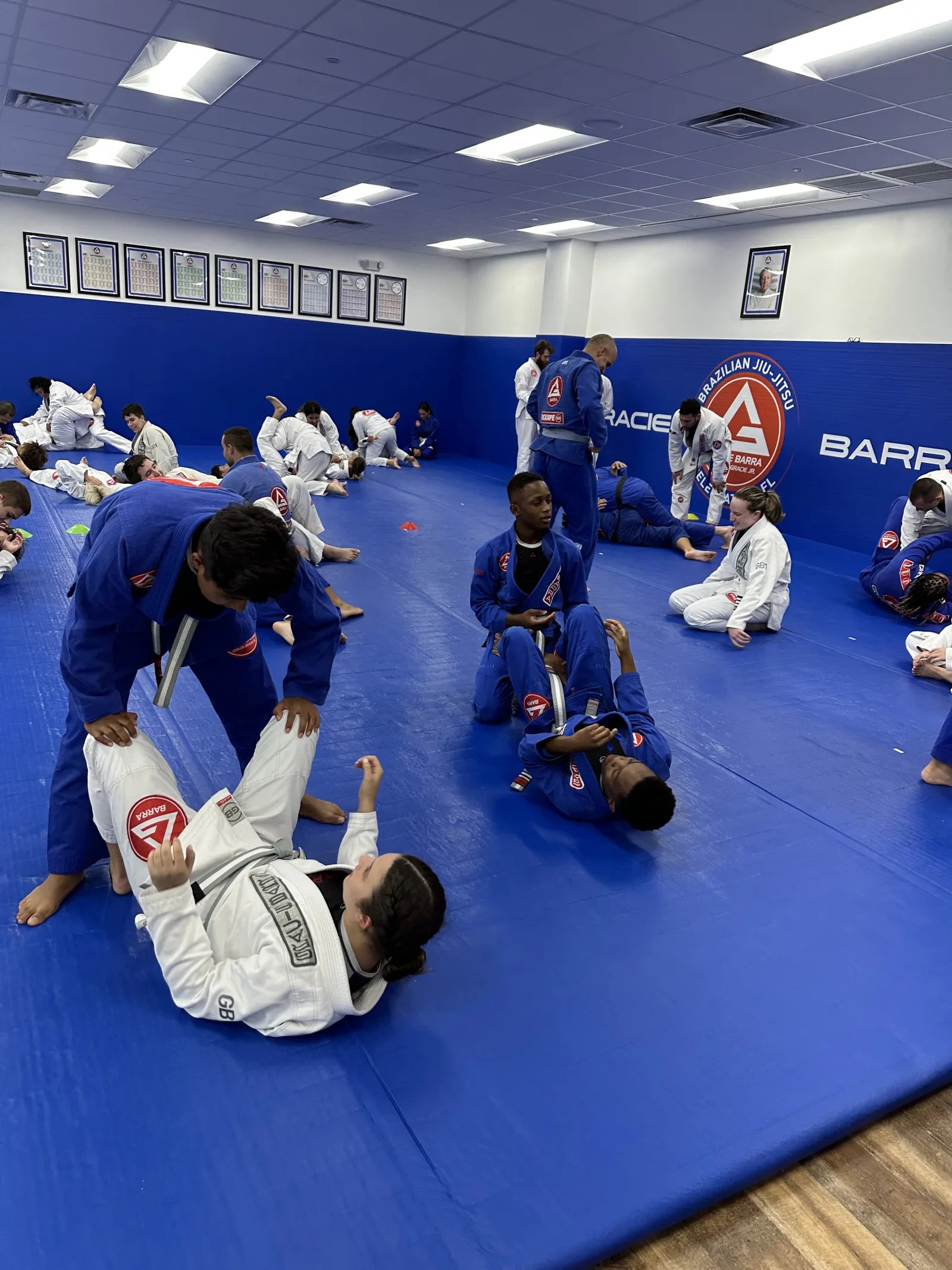
Cauliflower Ear
What It Is
Cauliflower ear is the signature injury of grappling sports. It occurs when the outer ear receives blunt trauma or repeated friction — typically from being pressed against someone's head during clinching, passing guard, or fighting for underhooks. The trauma separates the skin from the underlying cartilage, and blood fills the gap (a hematoma). If left untreated, the blood hardens, giving the ear a lumpy, deformed appearance.
How to Prevent It
- Wear ear guards (headgear): Wrestling-style headgear is the most effective prevention. Many competitors and long-term practitioners wear headgear during training, especially during heavy sparring.
- Don't let your head get trapped: Learn to keep your head free during scrambles. Good head position is a technique, not just a preference.
- Treat it early: If you feel your ear swelling or getting hot after training, ice it immediately. If a hematoma forms, have it drained by a doctor within 24-48 hours. Early treatment prevents permanent deformation.
At GB Celebration, we encourage students to wear headgear if they're concerned about cauliflower ear. There's zero stigma — protecting your ears is a smart decision, not a sign of weakness.
Mat Burn
What It Is
Mat burn is exactly what it sounds like — a friction burn from your skin sliding across the mat surface. It most commonly affects the tops of the feet, the knees, the elbows, and the forehead. Mat burn ranges from mild redness to open abrasions that need time to heal.
How to Prevent It
- Wear a rash guard: Even under your gi, a rash guard protects your torso and arms from friction.
- Wear spats: Compression tights under your gi pants protect your knees and shins.
- Keep your toenails trimmed: This won't prevent mat burn directly, but untrimmed nails catch on the mat and create micro-injuries that worsen with friction.
- Clean and cover existing mat burn: Use antibacterial ointment and cover any open mat burns with bandages before training to prevent infection.
Finger and Toe Injuries
What They Are
Gi jiu-jitsu is tough on fingers. Gripping the collar, sleeves, and pants puts enormous strain on the small joints of the hands. Over time, this can lead to jammed fingers, sprained finger joints, and the development of arthritic-like stiffness that's common among long-term gi grapplers. Toes can also jam when caught in the mat during transitions.
How to Prevent Them
- Tape your fingers: Athletic tape applied in an "X" pattern over the joints provides support and reduces hyperextension. Many experienced grapplers tape their fingers before every gi session.
- Don't death-grip: Newer students tend to grab the gi with maximum intensity and never let go. This burns your grip out quickly and puts excessive stress on the finger joints. Learn to grip and release strategically — grip when you need control, release when the position changes.
- Train no-gi regularly: Alternating between gi and no-gi training gives your fingers recovery time from constant gripping.
- Strengthen your grip: Counterintuitively, stronger grip muscles protect the joints. Grip trainers, rice bucket exercises, and dead hangs all help.
Knee Injuries
What They Are
The knee is one of the most commonly injured joints in BJJ. Sprains of the MCL and LCL (ligaments on the sides of the knee) are the most frequent, usually occurring during guard passing, leg entanglements, or takedowns. More serious injuries like ACL tears are possible but relatively rare in training when proper precautions are taken.
How to Prevent Them
- Tap early to leg locks: This is the number one prevention strategy. When you feel a heel hook, knee bar, or calf slicer being applied, tap before the pressure becomes dangerous. Ego is the primary cause of knee injuries in BJJ — don't let pride cost you six months of recovery.
- Strengthen the muscles around your knee: Squats, lunges, hamstring curls, and leg extensions build the musculature that supports the knee joint. Strong legs protect ligaments.
- Don't sit on your heels: Sitting back on your heels with your knees fully flexed puts the knee in a vulnerable position. Be mindful of your leg position, especially when playing guard.
- Use knee braces if needed: If you have a history of knee problems, a supportive knee brace can reduce risk during training.
- Warm up properly: Cold muscles and tight tendons around the knee increase injury risk. The warm-up at GB Celebration is designed to prepare every major joint for the demands of grappling.
Shoulder Injuries
What They Are
Shoulder strains and impingements are common in BJJ, particularly from techniques like the kimura, americana, and omoplata — all of which attack the shoulder joint. Shoulder injuries can also occur during scrambles when you post on an outstretched arm or try to prevent a sweep with your arm.
How to Prevent Them
- Tap to shoulder locks: Like knee injuries, most shoulder injuries in training are preventable by tapping before the lock reaches full extension. If your shoulder is being cranked, tap. You can drill the escape next time.
- Strengthen your rotator cuff: External rotations with bands, face pulls, and shoulder stabilization exercises protect the joint. Five minutes of rotator cuff work three times per week makes a significant difference.
- Don't post on outstretched arms: When you're falling or being swept, tuck your arms rather than extending them to catch yourself. A locked-out arm absorbing your bodyweight plus your opponent's is a recipe for shoulder (and elbow) injuries.
- Stretch your shoulders regularly: Shoulder circles, cross-body stretches, and doorway stretches maintain the range of motion that keeps the shoulder healthy under stress.
Neck Strains
What They Are
Neck strains typically come from stacking (when you're inverted and pressure is applied to your neck), fighting chokes for too long instead of tapping, or bad head positioning during takedowns and guard passing.
How to Prevent Them
- Strengthen your neck: Neck bridges, band exercises, and isometric holds build neck strength that prevents strains. Wrestlers have known this for centuries.
- Don't fight chokes with your neck: If someone has a choke locked in, tap. Fighting a tight choke by using neck strength alone risks disc injuries, nerve compression, and strains that can take weeks to heal.
- Protect your neck during inversions: When you're being stacked, turn to your side rather than absorbing the pressure straight on your spine.
The Importance of Warm-Up
At Gracie Barra Celebration, every class begins with a structured warm-up that prepares the body for the specific demands of grappling. This isn't an afterthought — it's an essential part of injury prevention. The warm-up includes:
- Joint rotations to prepare the shoulders, hips, knees, and ankles
- BJJ-specific movements (shrimping, bridging, technical stand-ups) that warm up the exact muscles used in training
- Light cardiovascular activity to raise core body temperature
- Dynamic stretching to prepare muscles for the ranges of motion required in grappling
Skipping the warm-up — or arriving late and jumping straight into drilling — significantly increases your injury risk. Make the warm-up non-negotiable.
The Golden Rule: Tap Early
If there's one message that runs through this entire article, it's this: tap early. The majority of training injuries in BJJ are caused by students refusing to tap because of pride, because they "almost had the escape," or because they didn't want to "lose" a roll. A roll in training is not a match. There is no trophy. The only thing you win by refusing to tap is an injury that keeps you off the mat.
Professor Rodrigo emphasizes this culture at Gracie Barra Celebration from day one. Tapping is a learning tool, not an admission of defeat. The student who taps 20 times in a session and keeps training will always outpace the student who refuses to tap, gets injured, and misses three months of training.
Train Smart, Train Long
The goal of injury prevention isn't to train less intensely — it's to train intelligently so you can train for decades. The practitioners who reach black belt and beyond aren't the ones who trained the hardest every session. They're the ones who listened to their bodies, tapped when they needed to, warmed up properly, and prioritized longevity over ego.
At Gracie Barra Celebration, we're committed to creating a training environment where smart training is the norm. Our coaching team — Professor Rodrigo, Coach Ryan, and Coach Marcello — actively monitors sparring, intervenes when things get too intense, and teaches injury prevention as part of the curriculum.
If you're considering starting BJJ but have been hesitant because of injury concerns, come see how we train. Schedule a tour class at 1420 Celebration Blvd, Suite 108, Celebration, FL 34747 or call (407) 739-4666. We'll show you that BJJ can be challenging, effective, and safe — all at the same time.